Quick Answer
A garage door that won’t close in Austin is most often stopped by dirty, misaligned, or blocked photo-eye safety sensors, a problem made worse by local dust, pollen, humidity, and intense sunlight. Other common culprits include a broken spring or cable, an obstruction in the track, incorrect opener limit settings, or storm-related electrical damage. Start with the safe, free checks before calling a technician, and never force a door that feels heavy or off-track.
Why Won’t My Garage Door Close? The Big Picture
If you’re standing in your driveway hitting the remote over and over while your garage door not closing in Austin TX stubbornly reverses or stalls, you’re not alone. Garage door openers are designed with federally mandated safety reversal systems, and that same technology that protects kids and pets is also the number one reason doors refuse to close.
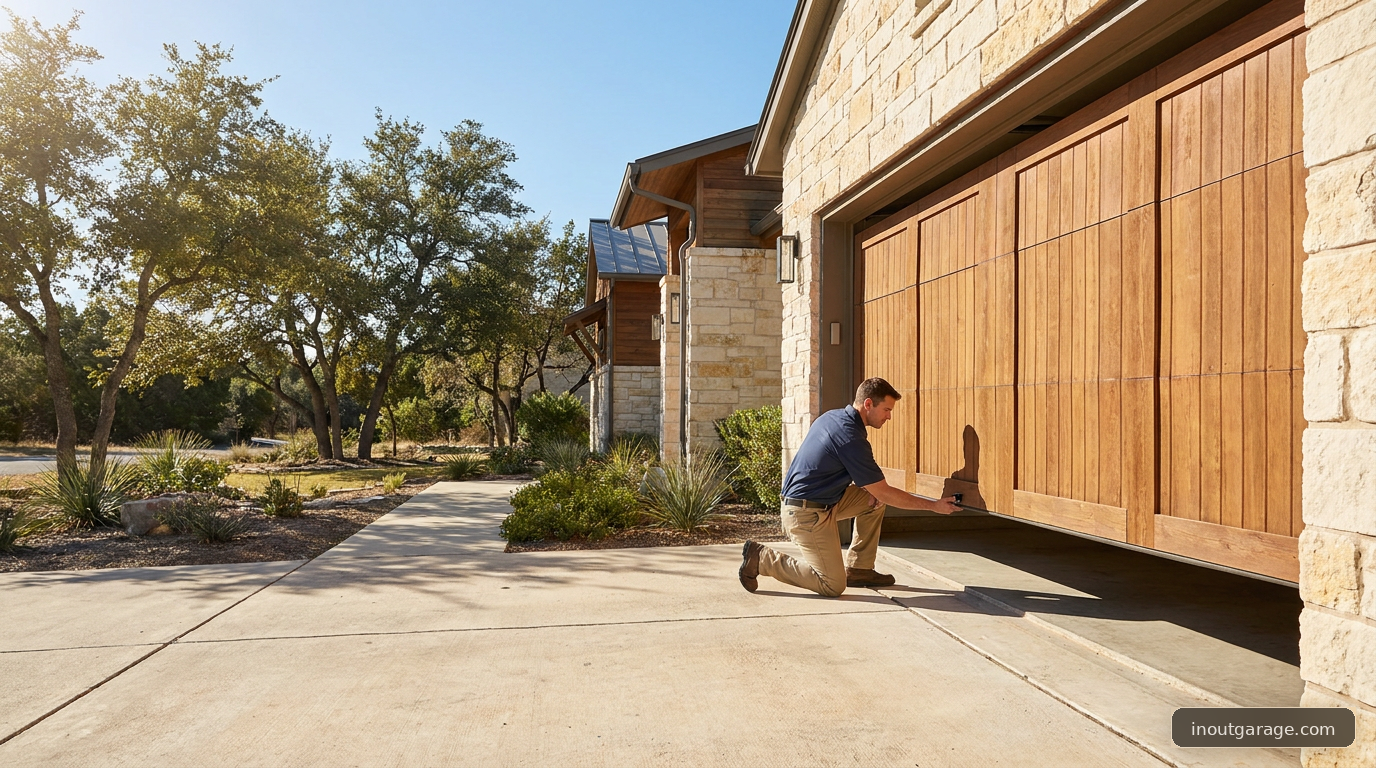
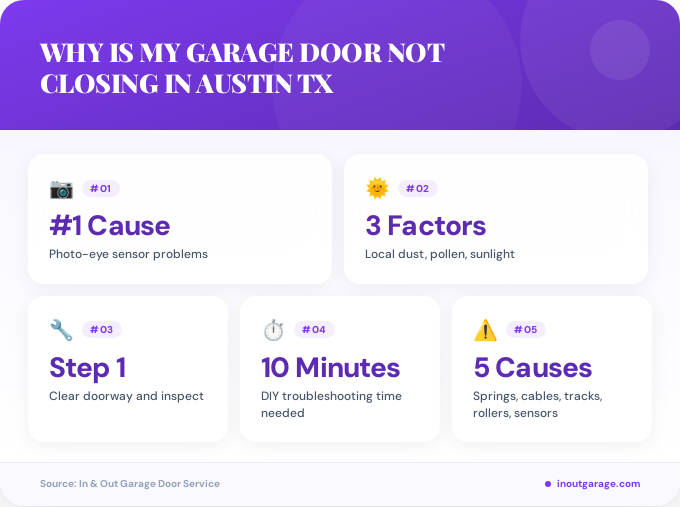
Local service data backs this up. Austin-area technicians consistently report that the single most common reason a door won’t shut all the way is a photo-eye sensor problem, whether that’s dust buildup, sun glare, misalignment after a bump, or a chewed wire, according to guidance from a local Austin garage door troubleshooting resource. Central Texas throws a lot at these sensors: live oak pollen in spring, construction dust from new subdivisions in places like Mueller and Leander-adjacent growth corridors, and strong low-angle sun that can wash out the infrared beam at certain times of day.
This guide walks through the real trade-offs: what you can safely check yourself, what should never be DIY’d, what drives repair cost, and the exact questions to ask before you hire anyone.
What Are the Most Likely Causes, and What Should I Check First?
Before assuming the worst, it helps to match your symptom to a likely cause. Austin-based repair guides list broken springs, cables, tracks, rollers, opener components, and sensors among the leading reasons doors fail to close properly, a pattern confirmed by an Austin garage door cost and diagnostics breakdown.
| Symptom | Likely Cause | Safe First Check |
|---|---|---|
| Door starts down, then reverses | Dirty/misaligned sensors, obstruction, force setting | Clear doorway, clean both lenses, confirm steady lights |
| Closes only while holding wall button | Sensor circuit or wiring fault | Inspect wiring; never bypass sensors |
| Opener hums, door won’t move | Broken spring, stripped gear, disconnected trolley | Stop use; visual inspection only |
| Door is extremely heavy by hand | Broken torsion or extension spring | Leave closed, call a technician |
| One side hangs low or rollers off track | Broken cable or bent track | Do not force door or reset track yourself |
| Opener has no lights or response | Tripped breaker, GFCI, or surge damage | Check breaker, reset GFCI once |
| Door stops short of the floor | Limit setting, warped track, worn rollers | Check floor seal and tracks |
Notice how many rows point back to the sensors. That’s consistent with what we cover in depth in our guide to how garage door safety sensors work and why they fail, which goes further into wiring faults and lens degradation over time.
How Do I Troubleshoot a Door That Won’t Close?
Run through this sequence before picking up the phone. It takes about ten minutes and resolves a surprising share of calls.
- Keep the area clear. Never stand under a door that’s partially open or behaving unpredictably.
- Inspect the doorway and tracks. Toys, trash cans, landscaping debris, and even acorns can trip the safety system.
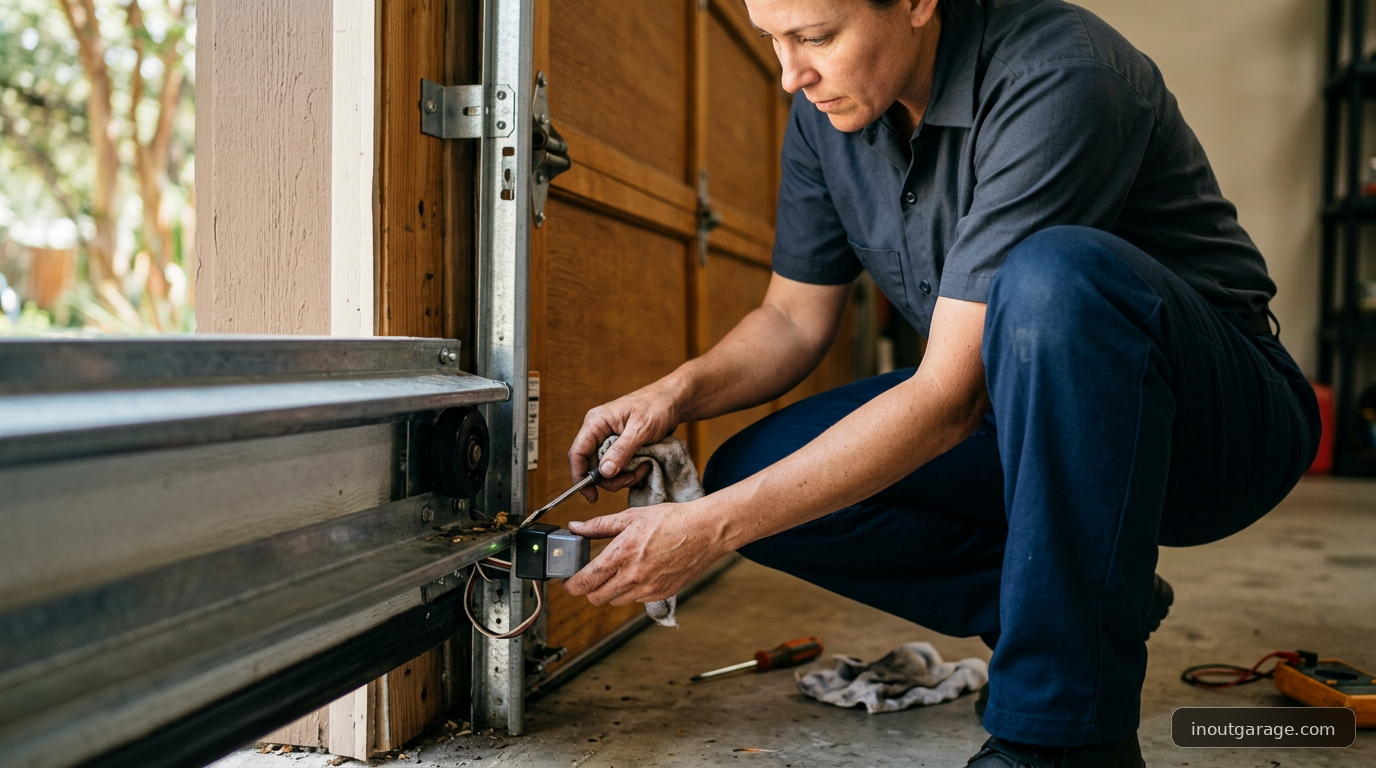
- Clean the photo-eyes. Wipe both small lenses near the bottom of the vertical tracks with a soft, dry cloth. Austin’s cedar pollen and road dust settle on these constantly.
- Check alignment. The two sensors should face each other directly at roughly the same height. A steady indicator light generally means proper alignment; blinking usually signals a fault, though colors vary by opener brand.
- Look at the wiring. Staples through the wire, frayed insulation, water intrusion, or wires pulled loose from terminals are common after storms or rodent activity.
- Test the wall control. If the wall button works but the remote doesn’t, the fix may be as simple as a dead battery, which we cover in our garage door remote battery buyer’s guide.
- Check power. Look at the breaker panel and any nearby GFCI outlet. Reset once, but don’t keep cycling it.
If none of these resolve it, you’re likely dealing with a mechanical issue rather than a sensor nuisance, and that changes the next step significantly.
Should I Fix This Myself or Call a Professional?
This is the central trade-off in this buyer’s guide. Cleaning a lens or resetting a breaker is safe and free. Anything involving springs, cables, tracks, or opener gear trains is not a DIY project, and national safety regulators have documented serious injuries from homeowners attempting spring and cable repairs, as outlined in the Consumer Product Safety Commission’s safety alert archive.
Here’s a simple way to decide which camp your problem falls into:
Remote battery swap: Yes
Clearing track debris: Yes
Breaker reset: Yes, once
Bent or off-track rail: Yes
Opener gear or circuit board: Yes
Repeated sensor faults: Yes
Several Austin service providers echo this split between homeowner-safe maintenance and technician-only repairs, including the diagnostic lists published by a 2026 Austin-area garage door repair cost guide and a separate Austin pricing and diagnostics resource. If you’re also noticing drafts, gaps, or weather intrusion around the door panel itself, it may be worth reviewing our weather stripping installation guide as a related but separate fix.
What Drives the Cost of Garage Door Repair in Austin?
We won’t quote figures here because every situation is different, but the real cost drivers are consistent across the industry:
- Size and type of door: a single-car door costs less to service than a double-wide, and insulated or custom panels add material cost.
- Severity and age: a sensor realignment is quick labor; a broken torsion spring on an older 1980s-wound system may need matched replacement springs.
- Parts availability: proprietary opener circuit boards or discontinued track hardware can add lead time and cost.
- Labor complexity: off-track doors, bent sections, or multiple simultaneous failures (common after hailstorms) take longer to diagnose and fix safely.
- Urgency: after-hours or same-day emergency calls, especially during storm season surges, typically cost more than scheduled daytime appointments, a trend also seen in regional reporting on seasonal emergency repair demand.
Because every home and door is different, the most reliable way to know what you’re facing is a free written quote rather than guessing from a blog post. Our team can evaluate your specific garage door repair needs on-site and give you an itemized breakdown before any work begins.
What Red Flags Mean I Should Stop and Call Someone Now?
Some symptoms are not “wait and see” situations. If you notice any of these, stop operating the door immediately and call a professional.
- The door feels unusually heavy when lifted by hand, a classic sign of a broken spring.
- You hear a loud bang before the door stopped working, often the sound of a cable or spring snapping.
- One side of the door is visibly lower than the other or rollers have jumped the track.
- The opener runs but the door doesn’t move at all, suggesting a disconnected trolley or stripped gear.
- Sensor lights blink no matter how much you clean and realign them, pointing to internal sensor failure or a wiring short.
Industry troubleshooting resources, including a national garage door opening and closing troubleshooting guide and a general garage door service resource library, consistently flag these same warning signs as reasons to stop DIY attempts.
What Questions Should I Ask a Repair Company?
Not every garage door company in the Austin metro operates the same way. Before you book anyone, ask these questions:
- Is the quote written and itemized, or just a verbal estimate?
- Does the technician carry matched torsion springs rated for my door’s weight, or will they order parts?
- Is there a warranty on both labor and parts, and how long does it last?
- Will you inspect the whole system (tracks, rollers, cables, opener) or only the reported symptom?
- Are you licensed, insured, and experienced with both standard and smart openers?
If you’re considering a full system replacement rather than another repair, our garage door installation overview and our Austin-specific installation page cover what that process looks like, including timelines and what affects project scope. Homeowners weighing opener upgrades may also want to compare options in our smart garage door opener installation guide.
Key Takeaways
- The most common reason a garage door won’t close in Austin is a dirty, misaligned, or blocked photo-eye sensor, often worsened by local dust, pollen, and sun glare.
- Broken springs, cables, off-track rollers, and opener limit issues are the next most frequent causes.
- Safe DIY steps include clearing the doorway, cleaning sensor lenses, checking alignment, inspecting wiring visually, and resetting a tripped breaker.
- Never attempt spring, cable, or track repairs yourself; these carry real injury risk documented by national safety regulators.
- Repair cost depends on door size, part severity, parts availability, labor complexity, and urgency, not a flat rate.
- Always request a free written quote so you know exactly what you’re paying for before work starts.
- If sensor faults keep recurring after cleaning and realignment, the issue is likely wiring or internal sensor failure, not a one-time fluke.
People Also Ask
Why does my garage door start closing and then reverse back up?
This almost always means the safety sensors detected an obstruction, dirt, or misalignment and triggered the reversal mechanism. Clean both lenses, clear the doorway, and check that both sensors point directly at each other at matching heights.
Can hot Austin weather cause my garage door opener to stop working?
Yes, extreme heat can affect circuit boards, capacitors, and plastic housing components over time, and intense sunlight can wash out the photo-eye beam. Summer storms also bring power surges that damage opener electronics.
Is it safe to manually force my garage door closed?
No, forcing a door that’s stopping for a mechanical reason can damage the track, cables, or opener further and creates a serious injury risk if a spring or cable is already compromised. Stop and have it inspected instead.
How do I know if the problem is the sensors or the opener itself?
If the door closes fully while you hold down the wall button continuously, the sensors or their wiring are the likely cause, since holding the button overrides the standard sensor check in many openers. If it still won’t close even then, the opener’s motor, gears, or circuit board are more likely involved.
Frequently Asked Questions
Why is my garage door not closing all the way in Austin TX?+
The most frequent cause is a photo-eye sensor that’s dirty, misaligned, or blocked by debris, which is common given Austin’s dust and pollen conditions. Other causes include limit setting problems, worn rollers, or a warped track.
What should I check first if my garage door won’t close?+
Clear the doorway of any objects, clean both photo-eye lenses with a dry cloth, and confirm the sensor indicator lights are steady rather than blinking. This resolves a large share of nonclosing door calls without any tools or parts.
Why does my door only close when I hold the wall button?+
This typically indicates a wiring fault or failing safety sensor circuit. It’s not a safe long-term workaround; have the wiring inspected rather than relying on holding the button every time.
Can a dead remote battery cause a door to not close?+
Yes, if the remote itself stops responding, it can seem like the whole system failed. Test the wall-mounted control first; if that works normally, a battery swap or reprogramming the remote usually fixes it.
How much does garage door repair typically cost in Austin?+
Cost depends on the door’s size, the severity of the issue, parts availability, and whether the job is scheduled or an emergency call. The most accurate way to know your cost is to request a free written quote after an on-site inspection.
Is a garage door that won’t close a sign I need a new door entirely?+
Not usually. Most nonclosing issues are sensor, spring, cable, or track related and are repairable without replacing the whole door. Full replacement is typically only recommended when the door is severely damaged, outdated, or repeatedly failing despite repairs.
A garage door that won’t close is rarely random. Whether it’s a sensor fogged with Austin dust or a spring that’s finally given out after years of Texas heat cycles, the fix usually comes down to accurate diagnosis. If you’ve run through the checks above and the door still won’t close properly, reach out through our contact page or visit In & Out Garage Door Service to schedule a free, no-obligation inspection and written quote. Learn more about our team and service area on our about page, and let a trained technician handle the parts that aren’t safe to DIY.